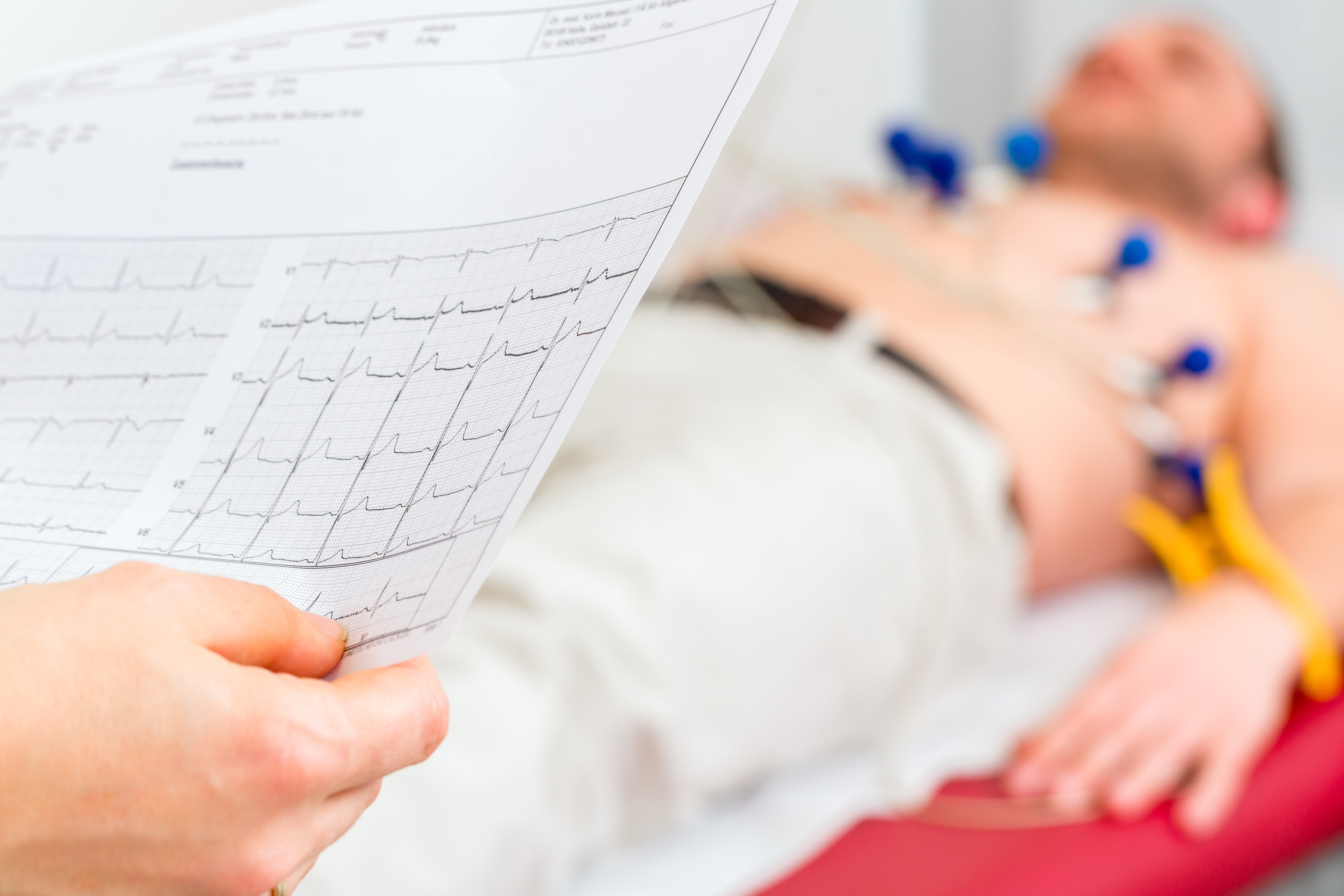
Drivers of private hire and taxi vehicles who have suffered any of a number of heart conditions require heart tests (taxi medical) before they are allowed to drive again. The standards used by most licensing authorities are those of the DVLA Group 2 requirements. These standards are strictly applied to drivers of Heavy Goods Vehicles (HGV) and the standards required to pass are to ensure the safety of the public and the drivers. Private hire and taxi licensing authorities including Transport For London (TFL) have applied the HGV DVLA Group 2 criteria to their licensed drivers. This is to ensure that drivers who have suffered a heart condition are well enough and safe enough to drive a private hire vehicle thus ensuring the safety of the travelling public (and themselves) on the road.
The main heart conditions that fall into the category of requiring further heart tests are coronary artery disease and heart failure. Heart tests for taxi drivers are applicable to any driver who has suffered from these heart conditions and any new drivers that have a prior history of these heart conditions.
Heart tests
For drivers with angina, a recent heart attack and/or a coronary stent insertion a Bruce Protocol Exercise ECG (exercise stress test) is an absolute requirement. There must be a minimum of 6 weeks interval from the completion of treatment (e.g. 6 weeks from the time of the heart attack or stent insertion) and they must be free of symptoms in that period. Drivers are required to complete 3 stages of the Bruce Protocol (9 minutes in total). All normal medication is allowed prior to the test. During testing, there should be no symptoms or ECG changes that suggest a significant narrowing of the heart arteries (the medical term for this is ischaemia). Similarly, during the recovery phase immediately after the test, the ECG must be normal and the heart rate and blood pressure must return to normal.
For some drivers, an echocardiogram is also a requirement. This particular heart test is an ultrasound of the heart and is used to assess the pumping function of the heart. This measurement is called the ‘ejection fraction’ and must be at least 40% to allow re-licensing. An echocardiogram may be required after a heart attack and is an absolute requirement following coronary artery bypass graft surgery. For all drivers, a repeat of these tests are required every 3 years.
For those drivers who have undergone coronary artery bypass graft surgery, testing must take place a minimum of 3 months after the operation (as opposed to the 6-week interval following a heart attack or coronary stent insertion). Drivers must have an echocardiogram and demonstrate the left ventricular ejection fraction (pumping action of the heart) is at least 40%. Drivers must then complete 3 stages (9 minutes) of a Bruce Protocol Exercise ECG test.
What does a heart test for a taxi driver involve?
| Heart condition | Heart test(s) |
| Angina | 1. Bruce Protocol exercise ECG 2. Stress echocardiogram if ECG not helpful* |
| Heart attack (myocardial infarction) | 1. Bruce Protocol exercise ECG 2. Echocardiogram may be required to assess ejection fraction |
| Coronary artery bypass surgery (CABG) | 1. Bruce Protocol exercise ECG 2. Echocardiogram essential 3. Stress echocardiogram if ECG not helpful* |
| Heart failure | Echocardiogram to ensure ejection fraction is above 40% |
*A stress echocardiogram may be required if the ECG shows a change such as bundle branch block or if there are ECG changes during exercise testing
Stress echocardiogram
For some drivers, a stress echocardiogram may be required. This is usually if an exercise test cannot be completed to the required standards (due to arthritis) or there are ECG changes that mean standard exercise testing is difficult to interpret (e.g. If a driver has an ECG that shows a bundle branch block pattern). Sometimes a driver’s exercise stress test does not give a clear result and they may also require a stress echocardiogram for clarification.
A stress echocardiogram involves having a heart ultrasound before exercising. An exercise treadmill test is then undertaken that involves walking on a treadmill to a person’s peak exercise capacity (there is no time requirement). Once peak exercise is reached exercising is stopped and the echocardiogram is repeated. A comparison is made between the baseline heart scan and the one after exercise to assess if exercising has had any detrimental effect on heart function.
Driver heart assessments at Birmingham Cardiology
At Dr.Hamaad’s cardiology clinic we can arrange all of the above heart tests for HGV, private hire and taxi drivers. We understand that people’s livelihoods are dependent on the outcome of these tests and we offer short notice appointments at very competitive costs. For further information or to book an appointment please call the booking office on 0121 396 1216 or complete the enquiry form.